
The Hidden Profit Lever in Heavy Oil: How Diluent Control Can Make or Break Your Crude Economics
An Expert Q&A with Jarret Torris President and Founder, BLCK Optimization Inc.
Introduction
The heavy-oil market faces ever increasing pressures to maintain and maximize the value of every barrel entering the pipeline. From tightening vapor pressure specifications, high diluent costs, and operational constraints on viscosity, the economics of crude transport and sale can shift dramatically depending on quality control and how well it is managed.
In this Q&A, Jarret Torris, President and Founder of BLCK Optimization Inc., shares his insights on how real-time quality management, analyzer integrity, and optimized diluent programs can transform the economics of heavy oil production in Canada.
Q1. How much does the management of crude quality matter for heavy oil producers at the Terminal, lease, or battery level?
Great Question to Kick Us Off! Quality management absolutely matters at the terminal, lease, and battery level more than most producers realize. Quality control does not end once the crude leaves the lease; the moment it enters a pipeline system; it is subject to that system’s full specification envelope and commercial rules. While vapor pressure and viscosity are some of the most talked-about specifications today, many streams have additional requirements per their quality pool specifications that directly influence shipper value.
These specifications affect the netback, the marketability, and the operational flexibility of every barrel. Mismanaging diluent ratios, overlooking specification limits, or failing to understand how a pipeline measures quality can lead to avoidable losses such as downgraded product classifications, restrictions or curtailments, unnecessary purchases of corrective blend stock, or higher transportation costs.
The quality decisions made upstream determine both the operational performance and the commercial performance downstream. In short, how well you manage crude quality at the source defines how efficiently, safely, and profitably your barrels move through the entire value chain.
Q2. What is TVP? I thought it was RVP. I also listen to VPCR and a bunch of other acronyms. We just want to know what to do to stay in spec.
This is always a delicate topic because people in industry often mix up terms like TVP, RVP, VPCR, and “True Vapor Pressure.” The most important thing is to confirm what your specific pipeline requires. But assuming you are on a common Canadian system, the correct specification is usually:
VPCR (ASTM D6377). The correct terminology for crude oil is VPCR — “Vapor Pressure at Crude Oil Reference Conditions”. This test uses a controlled mini-volume chamber that prevents flashing and provides an accurate representation of how crude behaves in a pipeline. The ratio is often described as 4:1, but the key point is that the method maintains equilibrium without allowing light ends to escape.
The industry often throws around the word different acronyms, but it is rarely used correctly. Here’s what each term actually means:
Total Vapor Pressure (TVP – Storage/Marine)
A different ASTM method (e.g., D6897).
Measures total pressure from all volatile components.
Likely not used in crude pipelines.
True Vapor Pressure (Thermodynamic TVP)
A theoretical property from EOS models (e.g., Peng-Robinson).
Represents equilibrium vapor pressure at which liquid and vapor coexist at a given temperature.
Not a pipeline compliance method.
VP – Reid Vapor Pressure (ASTM D323)
·Older method still used for gasoline.
·Large expansion causes flashing, which exaggerates vapor pressure.
Not typically used for crude oil unless stated in the tariffs.
Q3. How does viscosity come into play, and how do pipeline specifications constrain what a producer can move?
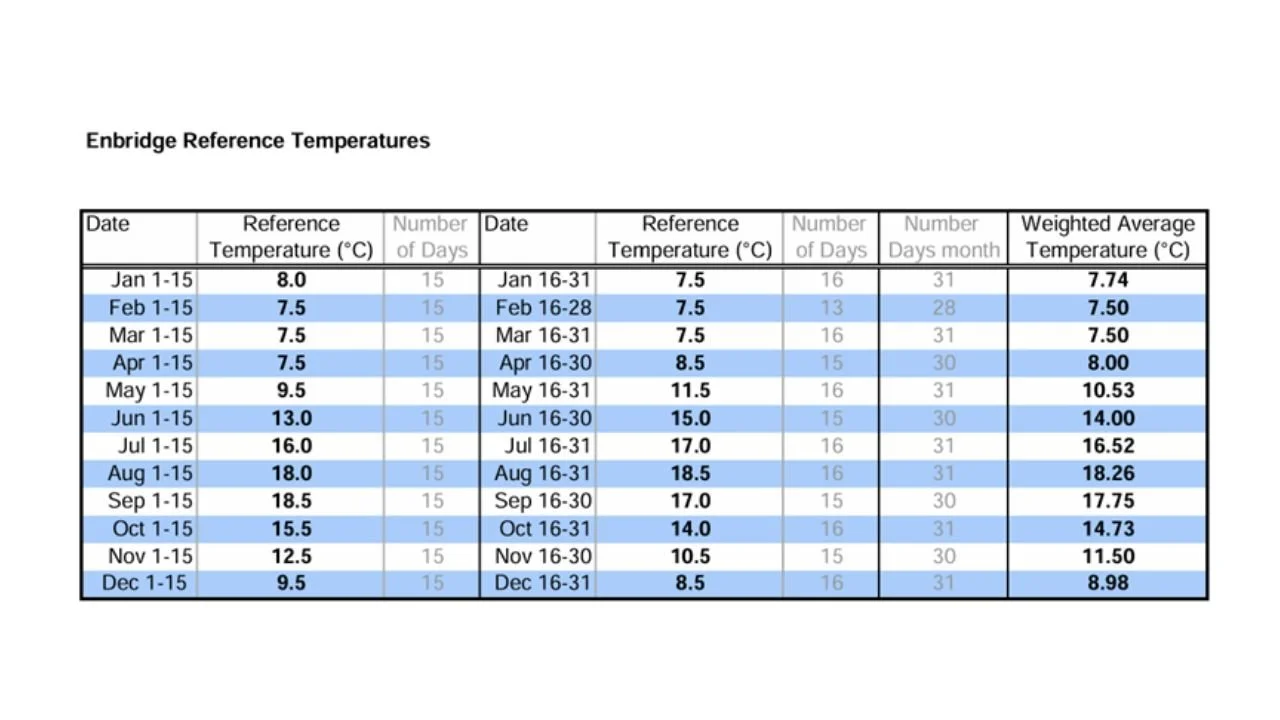
Viscosity plays a vital role in pipeline transportation because it directly affects hydraulic drag, pump horsepower, pressure drop, and the ability of the system to move product safely within its design limits. Most pipeline tariffs place maximum viscosity specifications on heavy crude, bitumen, and diluted bitumen—commonly around 350 cSt at a defined reference temperature. See Appendix A These limits exist to protect pipeline hydraulics, maintain stable flow rates, and prevent operators from exceeding the system’s Maximum Allowable Operating Pressure (MAOP).
Because viscosity determines how hard the pipeline must work, it also dictates how much diluent a producer must add to ensure pumpability. Proper viscosity management keeps power requirements under control, ensures compliance with tariff limits, and minimizes OPEX. Conversely, poor, or inconsistent diluent management can create unnecessary losses for both the producer and the carrier. Diluents such as condensate or a Drag Reducing Agent (DRA) are expensive, and every unnecessary barrel added directly reduces netback.
Cheaper alternative diluents may appear attractive, but they often carry trade-offs—particularly elevated VPCR, as discussed in Question 2. If VPCR climbs above allowable limits, the result can be operational restrictions, shut-in events, or even safety concerns. Pipelines must maintain viscosity compliance regardless of the blend delivered, so if a producer under-dilutes or mismanages quality, the carrier may apply additional diluent charges to bring the product into spec. Those costs directly erode producer economics.
In short, viscosity is not just a physical property—it is a fundamental economic and operational constraint that determines what a producer can move, how efficiently it moves, and what it ultimately costs to transport.
Appendix A
Q4. Ok so controlling the balance between maximizing diluent blending while staying compliant with VPCR and Viscosity limits is critical for a bunch of reasons – specifically safety and fiscal management. It seems like a fine line, how do you achieve the best outcome?
Controlling the balance between maximizing diluent blending and staying compliant with specifications such as VPCR and viscosity is critical—not just for economics, but for operational safety and regulatory compliance. The line between value and risk is genuinely narrow, and achieving the best outcome requires more than static blend ratios or rule-of-thumb approaches.
Optimization relies on dynamic modeling. Both VPCR and viscosity must be corrected for temperature, seasonality, sample conditioning, and the nonlinear response that occurs as diluent as your commodities change due to sourcing decisions or well conditions. Reducing viscosity improves hydraulics, but it can simultaneously raise VPCR, so both variables must be monitored together in real time now couple in the other 10 or so quality specifications and there are a lot of unknown factors that you cannot identify by simple testing methods. The most effective strategy has two components:
1. Corporate-Level Quality Compliance Program
A structured program—similar in rigor to HSE systems—provides operators with standardized procedures, blend windows, QA/QC requirements, sampling practices, and escalation protocols. This removes guesswork and ensures decisions are aligned with tariff specifications, safety limits, and economic outcomes.
2. Continuous Measurement & Advanced Process Control
Trustworthy in-line analyzers, ASTM-aligned sampling systems, and robust data validation are essential. With real-time VPCR, density, and viscosity feedback, operators can safely push blending limits while maintaining compliance.
Across the industry, we are seeing strong demand for both administrative and operational controls from producers and midstream operators—revised Standard Operating Procedures (SOPs), quality management programs, competency training—and engineered controls like in-line analyzers, system upgrades due to aging devices, new technologies or advancements in software such as the AI and ML solutions. The retrofit of these systems is accelerating as prudent operators move toward a more disciplined, technology-driven approach to quality management.
Q5. What are the main technical tools or analyzers used to manage and verify these properties in real time, and how have they changed?
This is a fun question for me because it is one of the core reasons BLCK Optimization exists. Throughout my career, I watched vendors and engineering firms push their preferred technologies, often without considering whether they were the right fit for the client or whether they integrated well with existing systems. BLCK takes the opposite approach—we are completely agnostic. We evaluate the full landscape of OEM analyzers and measurement tools, and then design integrated solutions based on what the operation needs.
Today’s real-time quality management systems generally involve combinations of:
Primary volumetric measurement devices (Coriolis, ultrasonic, PD meters)
Inline quality analyzers (optical spectroscopy, X-ray, Vapor Pressure, viscosity)
Composite sampling systems
Supervisory software and QA/QC automation
I often mix and match OEM technologies because no single vendor is the best at everything. BLCK has spent years researching, field-testing, and validating these systems, so we know which combinations work and which do not. In some cases, the client may not need a full system overhaul—the first step is simply auditing their existing installations and building a plan around their current exposure to quality risk. You cannot optimize what you cannot measure, and measurement always begins with understanding your baseline.
The biggest issue we see with modern analyzer systems is not the technology—it is the implementation. Many systems are purchased without a deep understanding of the conditioning requirements, calibration discipline, or maintenance workflows needed to keep them accurate. We are frequently called in to recover equipment that was bought, installed, and then abandoned due to drift, fouling, or lack of confidence. With proper alignment, these systems can regain trust and perform exactly as intended.
Analyzers are powerful tools, but they are not plug-and-play. Most failures are rooted in installation, calibration, loop design, sample conditioning, or maintenance, not the analyzer itself.
Q6. From an economic standpoint, how significant is the value difference between optimized and non-optimized blending?
Optimized quality management consistently generates material economic gains, while non-optimized quality management can quietly destroy value.
Across the systems I’ve worked on throughout my career, the economics of a fully optimized program almost always pay back quickly and then continue generating returns for the entire operating life of the asset. ARR’s above 30% are common — even on brownfield upgrades — because you’re unlocking value that was never visible or quantifiable before optimization – this is on top of what you could calculate.
A key question every operator should ask is:
“Am I fully optimized?”
Most companies assume they are, but without routine health checks, analyzer verification, correlation reviews, and model adjustments, they often accept a status quo that leaves 5–20% of potential value on the table. In many cases, they don’t even realize that value exists.
A properly optimized quality program always produces the same three outcomes:
Safe. Relatable. Predictable.
Those attributes directly drive higher netbacks, lower OPEX, fewer disruptions, and stronger bottom-line performance.
Q7. How does viscosity reduction through proper blending affect pipeline drag and throughput economics, and do the producers see benefit?
Reducing viscosity through proper blending has a far greater impact than most operators typically account for. While specs like viscosity directly affects diluent cost and netback, its influence on pipeline drag, pump horsepower, and overall throughput efficiency is equally important—and often undervalued unless you are the pipeline operator.
These reductions translate into real savings over the life of an asset—less purchased power, reduced strain on rotating equipment, and more stable operations. With increasing demands on the electrical grid and rising energy costs, the secondary and tertiary benefits of proper viscosity management will play an even larger role in the future economics of quality programs.
Q8. How can improper blending due to analyzer drift or error create hidden losses or penalties for a producer?
This is a great question and one we encounter frequently. Improper blending caused by analyzer drift or measurement error usually stems from a misunderstanding of the underlying ASTM reproducibility of the method or the device itself. Many producers invest significant capital into analyzers and assume that because the equipment is expensive, it will automatically deliver perfect results. Unfortunately, that is rarely the case.
ASTM methods often include broad reproducibility limits, and these limits assume that every operator, sampler, and lab is following identical procedures with identical discipline. In real field environments, this almost never happens. Sampling practices vary, analyzer calibration drifts, conditioning systems foul, and operational staff—who may not be fully trained on the nuances of the equipment—can unintentionally introduce error without any immediate indication.
When analyzers drift or provide biased readings, the impact is almost always financial:
Over-dilution, leading to unnecessary diluent cost.
Under-dilution, triggering pipeline penalties or forced corrective actions.
Missed optimization opportunities because operators do not trust the readings.
These losses are “hidden” because they are not line-items on a financial statement—they are parameters that are not visible to the human eye. Without proper QA/QC, calibration programs, or operator competency, even the best analyzer can lead to significant unrecognized economic losses.
Q9. Will the wrong instrument and control selection or blending strategy damage the economics of a project?
Absolutely - selecting the wrong instrument, control philosophy, or blending strategy can materially damage the economics of a project. I often compare it to googling “motor oil” and putting a generic product into a high-performance sports car. It may look fine on the surface, but if it’s not engineered for the application, the consequences can be expensive.
Not every analyzer, control device, or blending method is fit for purpose, and mismatches can create false confidence in the data being used to make operational decisions. A good example from my own experience was a system where the entire diluent injection strategy was controlled using an inline vapor pressure analyzer configured for RVP. However, the pipeline tariff required VPCR (ASTM D6377). Because RVP and VPCR behave very differently—especially in heavy blends—the system reported a significant vapor pressure step change when we were brought in after the fact to identify and correct it, giving operators an uneasy feeling on the device itself moving forward.
Situations like this can lead to penalties, forced blending corrections, reduced netbacks, or even shut ins. While issues can often be fixed, improperly scoped systems add unnecessary cost, delay, and reputational risk. Ensuring the right technology and control strategy are selected from day one is essential to protecting both operational integrity and project economics.
Q10. What strategies or technologies are emerging to automate and continuously optimize these parameters?
Well technology is always advancing, so it seems that we are always being asked to participate in trials for new devices as they are hitting the market. Some of these technologies work well in Western Canadian crude slates, while others struggle with the complexity and variability of our products. What we are seeing, however, is a clear inflection point: larger operators are investing heavily in tighter quality control, and that discipline will eventually cascade through the entire industry.
From my perspective, the real leap forward will come from advanced process control. As measurement systems become more reliable and data streams become cleaner, the opportunity shifts from simply “measuring quality” to actively optimizing it in real time.
It’s an area of significant development and one we are taking very seriously. The future of quality management will move from manual, experience-based decisions to automated, data-driven optimization that continuously aligns safety, compliance, and economic outcomes.
Q11. For producers looking to improve their optimization programs, where should they start?
Producers who want to improve their blending and quality management programs should start by engaging with their field teams and expressing that a path to optimization is rooted in their exceptional work to date, and that the process is about supporting them with exciting new opportunities – not taking away job security. I have been on both sides of this, and it can feel awkward to address the socioeconomic factors after you have started an optimization program.
The next step is to engage specialists who understand both the technology and the operational realities. There is a major difference between buying and installing equipment and implementing and maintaining a functioning quality program. Even the strongest engineering teams often benefit from specialist support, simply because this space is so nuanced.
If external support isn’t immediately feasible, the best starting point is a structured self-audit. Review your pipeline tariff requirements, verify how you currently manage your product quality, and then identify any gaps in sampling, analyzers, calibration programs, or operational procedures. From there, build a roadmap that moves from basic compliance toward controlled optimization and then ends in advanced process control optimization.
Closing Thought
Optimization is not guesswork and can’t be found by a Google search or Chat GPT — it is a discipline rooted in measurement integrity, sampling representativeness, analyzer alignment, and operational consistency. When those fundamentals are in place, the economics take care of themselves.

Jarret Torris is the President and Founder of BLCK Optimization Inc., a Calgary-based company specializing in hydrocarbon optimization strategies, analyzer technologies, and advanced process-control solutions. BLCK Optimization works with midstream and upstream operators across North America to improve product quality, reduce operational constraints, and maximize EBITDA through integrated optimization programs.