
Methods to Reduce Environmental Impact of In-Situ Recovery of Heavy Oil and Bitumen - Part 1
Have you read Dr. Harding’s high-level primer on PHYSICAL PRINCIPLES INVOLVED IN THE RECOVERY OF HEAVY OIL AND OIL SANDS BITUMEN already published in the CHOA eJournal?
Then let’s jump into the full paper…
METHODS TO REDUCE ENVIRONMENTAL IMPACT OF IN-SITU RECOVERY OF HEAVY OIL AND BITUMEN
ABSTRACT
The situation in the energy industry and the oil industry has changed significantly in the past few years. The common perception is that global climate change is beginning to have severe impacts on communities in the form of more frequent and increasingly violent weather events. In addition, environmental groups have been successful in limiting development of new projects by opposing construction of pipelines that would have allowed increases in production from Alberta oil sands. Globally, investment in new oil production projects has been lower than required to sustain production.
“...there is increasing pressure on the petroleum industry…find more environmentally and economically sustainable methods to produce heavy oil and oil sands.”
As well, the federal government in Canada has announced gradually increasing carbon penalties affecting project economics. Many people consider electric vehicles to be a viable option now and the costs of solar and wind power have come down substantially making them more economically viable.
So, there is increasing pressure on the petroleum industry and an even greater need than before to find more environmentally and economically sustainable methods to produce heavy oil and oil sands to contribute to the growing need for energy worldwide, to meet carbon emission targets and to lessen the negative publicity that the oil industry receives. This paper describes a number of ways to modify existing recovery methods and introduces some new ideas that, if used, will make heavy oil recovery more socially and environmentally acceptable.
INTRODUCTION
Heavy oil recovery, including recovery of bitumen from oil sands, is currently facing some serious challenges. The World is in transition, trying to move away from the use of coal, oil and natural gas, motivated mainly by well-known concerns about increasing levels of carbon dioxide in the atmosphere and its effect on global warming. Thus, there is a movement to replace fossil fuels that create carbon dioxide (CO2) during their combustion with renewable energy systems that do not produce CO2 that will end up in the atmosphere. Because of their basic properties, heavy oil and bitumen production operations have higher levels of CO2 emissions compared with conventional oil and gas production. This is basically due to the higher viscosity of heavy oil and the need to reduce its viscosity in order to make it flow at commercial production rates. This reduction in viscosity has mainly been accomplished by heating the reservoir, with steam injection being the most successful method for heating the heavy oil in-situ but of course steam generation normally involves the burning of fuel which adds to the carbon footprint of the production. The use of steam also requires water of boiler feed quality and this imposes an additional environmental concern related to the supply of this water as well as costs for water treatment and disposal. Because heavy oil and bitumen are typically more expensive to produce, their production is more sensitive to decreases in oil price or increases in the differential between light and heavy oil. So, the challenge for heavy oil and bitumen recovery is to reduce the environmental impact of their production by lowering CO2 emissions and water usage and at the same time reduce costs and improve the economics.
“... the challenge for heavy oil and bitumen recovery is to reduce the environmental impact of their production by lowering CO2 emissions and water usage and at the same time reduce costs and improve the economics.”
It is probably worthwhile at this juncture to briefly discuss the need for heavy oil and bitumen because obviously, if there is no need for these commodities in the future, it is futile to discuss methods for addressing the challenges facing their production. The human population on the planet is expected to continue to grow although the rate of growth is gradually decreasing. People in developing countries aspire to a higher standard of living, more like that in advanced economies, and one of the facilitating elements in that quest is the availability of reliable and affordable energy. Also, in most developing countries there is a shortage of energy and a lack of money to make the transition to lower carbon emitting technologies. Standard of living and energy consumption are directly correlated. Because of the rising population and aspirations for a higher average standard of living, it is expected that energy demand globally will continue to rise. This increased demand for energy will be partly met by renewable energy systems as they are brought online but an increase in oil and gas consumption is also expected. It will be practically impossible to meet the aspirations of the people in developing countries while simultaneously moving to eliminate the current mainstay of energy production: petroleum.
“Because of the rising population and aspirations for a higher average standard of living ... it will be practically impossible to meet the aspirations of the people in developing countries while simultaneously moving to eliminate the current mainstay of energy production: petroleum.”
And in addition, given the massive infrastructure that has been developed around the use oil and gas, it is going to take significant investment of time and money to replace the existing systems.
Consider the vast network of pipelines that transport and distribute natural gas to homes, businesses and factories for heating. In northern countries like Canada the heating of buildings is extremely important. And it is difficult to see how jet fuel can be replaced but there may be a technological breakthrough in future that can resolve this issue. Petroleum is also used for production of fertilizers, plastics, cement, steel and synthetic fibres. And there will the problem of how to dispose of the millions of internal combustion engines, fueling stations, pipelines and distribution systems and production operations, while simultaneously investing in new energy infrastructure.
And there are some issues with alternative energy systems such as wind and solar power: these are both intermittent and there will be difficulties providing base load power generation using these methods. Battery storage has been suggested as a solution to this problem but then the issue arises of securing supplies of rare earth metals required by the batteries, and the high cost of providing so much power storage. Ultimately, there may be a new environmental challenge caused by the need to recycle or dispose of spent batteries. Certain countries, like China, control the supply of the much-needed rare earth metals and mining for them requires energy and will involve some environmental impact. And then there is the question of where to put the solar panels: they take up a large amount of space and need to be located in sunny places where agricultural production will not be displaced. New power transmission systems to potentially remote locations will need to be built. One may also wonder how effective the solar panels will be if they become covered with dust or snow, a definite concern in Canada, and what the maintenance cost will be. Nuclear power using fourth generation small modular reactors (SMRs) should be part of the solution, but public sentiment is almost as strongly against the nuclear industry as it is the petroleum industry. In principle, nuclear power does not have any carbon emissions associated with it but there is the omnipresent issue of nuclear waste disposal for which there is still no well accepted solution.
Safety and security of nuclear power installations must be assured. Hydropower is clean and emissions free but many of the best locations for dams have already been developed and there are people advocating the removal of older dams to allow free run of the rivers which would reduce the power available unless new dams are constructed. Hydro dams cause disruption of river flows and fish migration and they flood large areas of land. Production of hydrogen to be used as a transportation fuel has received quite a lot of attention but infrastructure is essentially non- existent and the cost of production of hydrogen is high. The large explosive range, difficulty in containing hydrogen and its ability to cause embrittlement in steel must be kept in mind. The lack of a plan for how to make the transition from fossil fuels to other sources of energy along with the inevitable high costs and time required are likely to slow the transition.
Based on the above brief discussion, let us proceed on the assumption that oil and natural gas will continue to be needed as energy demand grows and the need for petroleum for certain specific uses will remain. Carbon capture and storage (CCS) may help to reduce carbon emissions related to fossil fuel production and use and facilitate the transition to alternatives while allowing continued use of oil and gas for specific purposes where there is no practical alternative. But CCS is capital equipment intensive, very expensive and there are limited options for underground sequestration of CO2. Also, adding more capital equipment to existing SAGD operations, which are already burdened with high capital and operating costs, will increase the risk of greater downtime for the entire facility simply due to the greater complexity of the operations and the interdependence of the various parts of operation.
Would it not be better to find ways to produce the oil with fewer associated carbon emissions or to eliminate the carbon emissions entirely? This would save about 30% of the wells-to-wheels emissions.
Another factor to consider is, that if at a point in the future oil prices drop below the breakeven point for heavy oil production, and remain there for an extended period, the heavy oil operations will be uneconomic and will be discontinued. The lighter oil production operations in other parts of the World, such as the Middle East, with much lower breakeven points, will continue to meet the demand for oil globally.
“Canada has seen most of its conventional oil produced and is left with a large amount of heavy oil and oil sands. The continued monetization of these resources will be aided by development of recovery technologies that reduce the environmental impact of the production operations and by reduction of costs and improvement of economics.”
Canada has seen most of its conventional oil produced and is left with a large amount of heavy oil and oil sands. The continued monetization of these resources will be aided by development of recovery technologies that reduce the environmental impact of the production operations and by reduction of costs and improvement of economics. It is a difficult task to reduce environmental impact and improve economics simultaneously, but this paper discusses promising ways to achieve these goals. Stated simply, reducing or eliminating steam injection as the way to recover heavy oil and bitumen is the most effective way to reduce the carbon emissions associated with their production. In order to appreciate the potential for the methods discussed, it is first important to understand the subtleties of the fluid properties and flow behaviour of heavy oil and the materials that are used to assist in its recovery. Appendix A, published previously on <date> <link> contains a description of the fundamental physical principles involved and the reader is referred to that Appendix as background for the discussion that follows.
PROMISING METHODS FOR IN-SITU RECOVERY OF HEAVY OIL AND OIL SANDS BITUMEN
Recovery Processes Employing Additives to Steam
If one accepts that there is a need to improve the economics and reduce environmental impact of heavy oil production, there are several ways to go about this. Steam additive processes are able to reduce the amount of steam required and this can reduce the carbon emissions and water usage per unit of oil production. The additives that have been subjected to considerable study and varying degrees of field testing are hydrocarbon solvents and non- condensable gases. These additives have different means of improving oil production performance and because of this it may be possible to employ a mixture of additives to achieve the greatest improvement in the process. In existing SAGD operations the addition of facilities to allow injection of additives with steam is relatively straightforward compared with construction of green field facilities.
Steam/Solvent Injection
Solvent addition to steam is a proven technique. It has been shown by extensive laboratory work, numerical simulation and field testing that a properly operated steam/solvent process can reduce the steam-oil ratio (SOR) by approximately one third while maintaining or accelerating oil production rate (Khaledi et al, 2015; Al-Murayri et al, 2016a; Al-Murayri et al, 2016b; Rabiei Faradonbeh et al, 2015; Rabiei Faradonbeh et al, 2016a; Rabiei Faradonbeh et al, 2016b; Hosseininejad Mohebati et al, 2012a; Hosseininejad Mohebati et al, 2012b). There have been many field pilots, some of which were poorly designed and executed, and these were unsuccessful and have cast doubt on the technology, but it is certain that if done properly, solvent addition to steam is effective and economic. For a steam/solvent process to be successful, the right solvent must be used, it must be injected in the right concentration with steam, and it must be injected at the right time in the recovery process. Reducing SOR has the effect of reducing energy input to the formation and CO2 emissions.
“… if done properly, solvent addition to steam is effective and economic.”
Numerical modeling of steam/solvent injection has been challenging and improvements have been made to analytical models to allow more rapid assessment of the potential for steam/solvent injection and to improve understanding of the process (Keshavarz et al, 2016 and Keshavarz et al, 2019). Reducing SOR frees up steam that can be injected into other wells so that a steam plant of fixed size may be utilized to steam a larger number of well pairs through the addition of solvent. Solvent to steam ratio of between 10 and 20 volume percent appears to be optimal. Higher amounts of solvent above this range do not appear to enhance the oil production rate or SOR appreciably. Injecting solvent early in the process, when there is lots of oil in the reservoir, provides the best opportunity for the solvent to enhance the steam- only process. An investigation has been done to evaluate the effect on relative permeability of steam/solvent injection so as to improve the ability to model the process (Esmaeili et al 2020c).
The solvent chosen should match the phase behavior of steam as closely as possible at the operating pressure of the process. The goal is to have the solvent travel with steam to the steam/vapor chamber boundary where it can contact the cool, highly bitumen-saturated, undepleted reservoir. Here the steam condenses releasing its latent heat of vaporization and the solvent condenses and dissolves in the bitumen further reducing its viscosity. In choosing a suitable solvent, it should be kept in mind that the phase behavior of the both the solvent and the steam is affected by the mole fractions of the materials present that govern the partial pressure of the materials and the temperature at which they will condense. If the solvent chosen is too heavy and is injected at too high a concentration, it will have a tendency to remain in the liquid phase and it may not be able to reach the vapor chamber boundary or rise in the formation with the steam thus limiting its effectiveness. If the solvent is too light, it will have a tendency to remain too long in the vapor phase and its effectiveness in diluting bitumen and increasing its mobility will be reduced.
Choosing a solvent that is slightly more volatile than water at reservoir conditions may be advantageous in terms of its ability to penetrate somewhat more deeply into the interface between the cold reservoir and the hot vapor chamber. Gas condensate is often a good choice as a solvent as it has about the right combination of molecular weights in its constituents for many reservoir pressure conditions. And it is lower in price than pure hydrocarbon solvents such as hexane and pentane. The availability of the latter solvents may also be an issue. Gas condensate is often used on site as diluent for making the produced bitumen pipeline transportable, so facilities and infrastructure are normally already in place for handling gas condensate.
“The main concern with hydrocarbon additives to steam has been the cost of the solvents and the need to have high solvent recovery to make the solvent addition economic. Strategies exist for maximizing solvent recovery …”
The main concern with hydrocarbon additives to steam has been the cost of the solvents and the need to have high solvent recovery to make the solvent addition economic. Strategies exist for maximizing solvent recovery such as providing a pressure boundary to contain the solvent by injecting pure steam at slightly higher pressure at the end well pairs of a well pad under steam/solvent injection. Tapering down the solvent injection to zero in the last few years of well pair life also assists in solvent recovery. Non-condensable gas injection may be used at the process end along with pressure blow down to increase solvent recovery. Steam/solvent injection will outperform steam-only injection in all reservoirs, but it would be prudent to avoid the leakiest reservoirs as this increases the risk of solvent loss. It is worth noting that such leaky reservoirs are also risky for pure steam injection.
Steam/Non-condensable Gas Injection
Non-condensable gas (NCG) injection with steam has been investigated for many years as an improvement over pure steam injection in heavy oil and oil sands recovery (Harding et al, 1983; Butler and Yee, 1986; Butler, 1999; Al- Murayri et al, 2011). Field tests with NCG injection date back to trials conducted by Imperial Oil at Cold Lake in the 1970s associated with steam stimulation operations there. Much work with a variety of additives to steam, including NCGs, was done in the 1970s by the Alberta Research Council (Redford, 1982).
A review of technical aspects of NCG addition to steam was presented by Harding (2014a) and Harding (2014b). NCGs carry much less heat than steam and do not condense so they do not release latent heat of vaporization to the formation. Once steam condenses into liquid form, its mobility is reduced, and it no longer has the ability to rise in the formation but rather drains downward as steam condensate. The NCGs however are able to continue to move in the gas phase through the porous media and to rise in the formation due to their low density. The NCGs will therefore tend to accumulate in the upper part of the formation and due to their increasing mole fraction in the vapor phase in the upper portions of the reservoir the NCGs are able to offer an insulating effect against heat losses to the overburden. Butler et al (2000) surmised that “in SAGP (Steam and Gas Push) much of the oil displacement is caused by the flow of fingers of gas/steam rising counter-currently to the draining oil, rather than by simple advance of a continuous steam chamber. The rising gas fingers … tend to push the oil down.” In a subsequent paper, Butler (2004) argues that “gas can move relatively easily, in small fingers, through the reservoir beyond the steam chamber.”
“… NCGs will therefore tend to accumulate in the upper part of the formation and due to their increasing mole fraction in the vapor phase in the upper portions of the reservoir the NCGs are able to offer an insulating effect against heat losses to the overburden …”
NCGs have also been seriously considered for use in wind down of SAGD near the end of its productive life and placing NCGs in the reservoir is seen as a way of maintaining reservoir pressure post-SAGD thus keeping pressure from collapsing as would be the case with steam cooling and condensing. NCGs also offer some viscosity reduction when dissolved in oil but the effect is much more limited than that of solvents. NCGs may contribute to more rapid expansion of the steam chamber by adding convective mixing at the steam chamber boundary and by leaking off into the cold reservoir.
There have been several field tests reported of NCG injection with steam in SAGD. Generally, a reduction in SOR was measured with little or no impact on oil production rate. Aherne and Maini (2008) concluded from examination of Dover Phase B pilot data that NCG flowed into the reservoir ahead of the steam chamber. Their analysis indicated that the steam chamber did not cool as expected which is consistent with the NCG leaking off into the cold reservoir. Also, bitumen production exceeded predictions based on imulation indicating that NCG addition did not have the level of negative consequences forecast. This extra production was attributed to drainage from the Inclined Heterolithic Strata (IHS) in the upper part of the reservoir, the drainage from which was assisted by the NCG, and this prolonged the life of the well pair. Aherne and Maini (2008) also report additional evidence for fluid movement ahead of the steam front through examination of observation well pressure and temperature data. In some field trials of NCG injection with steam NCGs were reported to have ‘vanished’ (Japan Canada Oil Sands Limited (JACOS), 2009). This may have been the result of there being initial mobility to gas or water in the cold reservoir or dilation at higher pressure may allow the low-viscosity gas to flow into the cold reservoir due to permeability enhancement.
“… NCG injection with steam in SAGD … [provides] generally, a reduction in SOR … with little or no impact on oil production rate …”
Studies have shown that small amounts of NCG injection with steam, in the range of 0.5 to 2 mole percent, have a small beneficial effect on the process but at larger concentration may inhibit the flow of oil due to a suppression of the relative permeability to oil.
Some reported field pilot trials of NCG addition to steam in the Athabasca Oil Sands have involved methane addition to steam of up to 2 mol % (PetroCanada, 2005), (Japan Canada Oil Sands Limited, 2009) (Suncor Energy, 2010).
In history matching of production performance and temperature observation well data from a number of SAGD field projects, it was noticed that steam chambers often are unable to reach the top of the oil-bearing formation (Ito and Chen, 2010) (Chen and Ito, 2012). Production performance in such cases was explained by these authors as being partly due to NCG migration through the top of the steam chamber where it is then able to assist with drainage of bitumen from the layer above the steam chamber. In such cases, the injection of NCG may be beneficial for bitumen recovery using SAGD, as solution gas present in the reservoir, and released during heating of the oil, may not be sufficient to take full advantage of this phenomenon. It may be that because of increasing NCG mole fraction in the vapor with height in the steam chamber that it appears as though the steam chamber has not grown above a certain point due to suppression of the steam chamber temperature by the increasing concentrations of NCG. Generally, field experience provides evidence for reduced SOR and little or no effect on bitumen production rates when NCGs are introduced in late SAGD life when there is already a lot of heat in the reservoir.
Direct oxy-fired boilers have been suggested to produce a mixture of steam and NCG for injection, but these typically have gas/steam ratios substantially exceeding the desired amounts. If air instead of oxygen is used for combustion in such systems, the situation is made worse due to the large amount of nitrogen present. Nitrogen is mainly insoluble in both oil and water at reservoir conditions so there is minimal viscosity reduction effect but the large amount of NCG resulting has a mainly deleterious effect on the process through severe reduction in oil relative permeability and thus a commensurate reduction in oil production rate. Methane, flue gas and carbon dioxide have all been suggested as NCGs for injection. In the case of carbon dioxide injection, it is important to consider the solubility of the gas in water as well as oil due to its significant solubility in both fluids.
“Simulation of NCG addition to steam is challenging for a number of reasons.”
Simulation of NCG addition to steam is challenging for a number of reasons. First of all, viscous fingering is not included in simulation models and so it is impossible to adequately model the rise of NCGs in the heavy oil formations. Secondly, there is a time lag for gases to enter solution in viscous oils and this is difficult to model as there is limited information available on this phenomenon. And thirdly, the three-phase relative permeability of fluid flow in the oil sands reservoirs is complex and difficult to predict. Grid block averaging effects associated with the aforementioned phenomena further complicate the situation. Yee and Stroich (2004), in modeling gas-steam co-injection at the Dover Phase B SAGD project, found that the STARS simulator predicted a considerably smaller steam chamber size and cooler temperature at the edge of the steam chamber, due to the build-up of gas concentration, resulting in a significant decrease in heat and mass transfer and a pessimistic prediction of process performance. This is typical of simulation results of gas/steam injection. To improve on the generally accepted method for simulation of 3-phase flow in porous media, that is the use of Stone’s models, would require extensive laboratory study using two-phase oil-water and gas-oil systems, along with 3- phase experimental measurements, in order to improve the method for combing the 2- phase data. A start on this multi-decade long task has been made by collecting experimental 2- phase oil-water data (Esmaeili et al 2019a, Esmaeili et al 2019b, Esmaeili et al 2019c, Esmaeili et al 2020a, Esmaeili et al 2020b).
Hybrid Steam/Combustion Recovery Processes
The main advantage of in-situ combustion (ISC) over steam injection is that the heat generated in ISC by combustion of fuel in the reservoir is produced directly in the reservoir, whereas in the case of steam injection, the steam is generally produced on surface by boilers with about 85 percent efficiency and an additional 15 percent of the energy is lost during transmission of steam to the reservoir by surface line and wellbore heat losses.
“The main advantage of in-situ combustion (ISC) over steam injection is that the heat generated in ISC by combustion of fuel in the reservoir is produced directly in the reservoir…”
Another advantage of ISC often cited is that the ISC process uses a residual fuel in the formation, either unrecoverable residual oil saturation or hydrocarbon coke formed by the pyrolysis of heavy ends at high temperature; thus, there is essentially no cost for fuel for the ISC process. Drawbacks to the ISC process include difficulties with ignition and reaching high-temperature oxidation (HTO) conditions. The high temperatures associated with ISC, often greater than 600 °C, are also a concern as such high temperatures can damage downhole equipment. The production of unreacted oxygen in the production wells must also be avoided to maintain safe operating conditions and to avoid corrosion.
The production of tight emulsions has also been an issue for some ISC projects. Use of compressed air for combustion results in large quantities of non- condensable gases (NCGs) in the reservoir and these can cause high producing gas-oil ratios (GORs), erosion of downhole equipment due to high gas velocities and can promote sand production but the main, often- overlooked problem, is severe suppression of the relative permeability to oil. Similar to NCG injection with steam, the introduction of too much NCG in the reservoir reduces the ability of oil to flow and therefore reduces oil production rates.
The use of oxygen or highly enriched air injection eliminates many of the aforementioned problems with ISC due to the elimination of nitrogen from the process. In the case of pure oxygen injection, the gas volume is reduced to 20% of what it would be with air injection. Water injection along with air or oxygen allows the water to scavenge heat from hot rock that has experienced combustion temperatures and to generate steam in-situ to enhance the heat transfer and oil displacement.
“By combining steam and oxygen injection, many of the problems associated with ISC processes can be further reduced.”
By combining steam and oxygen injection, many of the problems associated with ISC processes can be further reduced. Ignition is practically assured by preconditioning the reservoir with steam increasing reservoir temperature near injection wells to steam temperature and from there HTO conditions can be reached rapidly. This assures efficient combustion and largely eliminates degradation of oil quality by low temperature oxidation (LTO). Maximum temperatures associated with HTO may be moderated by the presence of steam and held within the range of 500 to 600 °C. By injecting 9 volume percent oxygen with steam, approximately 50 % of the energy delivered to the formation is generated by combustion with the remaining 50 % injected with the steam. Thus, GHG emissions and water usage may be reduced by 50 percent or more. This has the potential to free up 50 % of the steam from the steam plant to be injected into other wells. The amount of NCG produced in the reservoir when oxygen is added to steam is significantly reduced compared to ISC projects without steam injection or those using compressed air injection. It is the opinion of the author that the combination of steam and oxygen injection, reducing the amount of NCG generated in the reservoir and having to be produced from the production wells, will offer superior oil production performance over a process like the Toe-to-Heel Air Injection (THAI) process (Greaves et al, 2001; Greaves et al, 2012) where essentially all of the combustion gas products associated with the air injection must be produced through the production wells, and their volume is considerable.
“… the combination of steam and oxygen injection, reducing the amount of NCG generated in the reservoir and having to be produced from the production wells, will offer superior oil production performance over a process like the Toe-to-Heel Air Injection (THAI) process …”
A hybrid steam/ in-situ combustion process has been proposed that is called SAGDOX (Kerr, 2012; Kerr and Jonasson, 2013) in which oxygen is injected with steam in ratios of approximately 9 to 35 volume percent. The main objective of SAGDOX is to reduce reservoir energy injection costs thus improving recovery process economics and thereby extending SAGD to lower quality reservoirs. SAGDOX may be particularly applicable to reservoirs with high water saturations, high shale content and thin pays. Another feature of SAGDOX is that reservoir temperatures higher than saturated steam temperature may be achieved independent of reservoir pressure. By maintaining HTO conditions, excessive low temperature oxidation (LTO) is avoided which degrades the performance of the process and this also minimizes the risk of unreacted oxygen entering production wells. Partial in-situ upgrading occurs due to pyrolysis of the oil.
“A hybrid steam/ in-situ combustion process has been proposed that is called SAGDOX … in which oxygen is injected with steam in ratios of approximately 9 to 35 volume percent.”
Usinga relatively small amount of gas (oxygen) injection results in a similarly small amount of combustion gas product, mainly carbon dioxide, and this NCG can have benefits for the recovery process and is also able to maintain reservoir pressure when steam is condensing. The NCG can provide a partially insulating gas blanket at the top of the formation; can increase convective mixing at the edge of the vapor chamber increasing rate of mobilization of viscous oil; and can be used as a source of NCG for wind-down of SAGD where the NCG can reduce the amount of steam injection required improving the steam-oil ratio (SOR) while maintaining oil production rates.
The hybrid steam/ISC processes offer much flexibility in terms of the average oxygen to steam ratio and the potential to vary the ratio throughout an oil recovery process. The degree of oxygen enrichment in air may also be varied over the life of a project such that more nitrogen is introduced in late life when a greater quantity of NCG is desirable to maintain reservoir pressure or during wind down of the process. For example, pure steam injection may be followed by a period of steam/oxygen injection where the steam/oxygen ratio is constant or either increasing or decreasing. A variety of well arrangements including both vertical and horizontal wells can be considered, and the use of vent gas wells may also assist with control of movement of the high temperature combustion zone. However, it may be very challenging to establish fluid communication with vent gas wells and operate them effectively so that liquid production from the vent wells is minimized while producing gas at desired rates.
“Several challenges with the SAGDOX process have been identified and these are mainly related to the high temperatures generated that can exceed 600 °C.”
Several challenges with the SAGDOX process have been identified and these are mainly related to the high temperatures generated that can exceed 600 °C. Protection of wells and well completion equipment from these high temperatures is essential and thus temperature monitoring equipment must be installed downhole in all wells along with cooling water injection equipment. Keeping the combustion zone in the centre of the formation will increase the energy efficiency of the process. Understanding the effect of the high temperatures, while of limited volume in the reservoir, on the in-situ stresses will be challenging and important.
Risks to the cap rock of high temperatures have been evaluated and found to be no greater than for steam-only processes (Saeedi et al 2018). Data available on the mechanical properties of reservoir sands and shales at temperatures over 200°C are very limited and this makes modeling of the changes in stress difficult.
Production of hydrogen sulphide is often associated with the high temperature combustion and this must be accounted for during field test planning in particular. 3D physical modeling of the SAGDOX process has been completed (Rios et al 2018). Handling of oxygen on surface requires a high degree of training and rigorous attention to operation practices but many industrial operations worldwide have shown that oxygen can be generated and transported safely. Costs for oxygen production and handling, including specialized materials, must be considered in project planning and economics.
Simulation of the combustion processes is very challenging due to the scale-up issues associated with reaction kinetics models and the significant computational time required as a result of the need to include additional material balance for components involved in the combustion reactions. A new reaction kinetics model for Long Lake bitumen was developed based on ramped temperature oxidation (RTO) data (Yang et al, 2016, Yang et al 2017a). It has been found that sufficient fuel is available in the form of residual oil in the steam-swept zone and that HTO can be established and sustained at low oxygen concentrations in the presence of steam but at the same time peak combustion temperatures are moderated by the presence of steam. This reaction kinetics model was used to history match combustion tube test data (Yang et al, 2019a) resulting in minor tuning of the model. Further development of the SAGDOX process has focused on addressing the main uncertainties and risks associated with the process including the management of combustion zone movement, the potential impacts of high temperatures on in-situ stresses (Saeedi et al, 2018) and the handling of produced gases including hydrogen sulphide and carbon dioxide. Accurate and efficient field-scale numerical modeling of SAGDOX has been accomplished allowing technical and economic evaluation of the process (Yang et al, 2017b, Yang et al, 2019b).
“Further development of the SAGDOX process has focused on addressing the main uncertainties and risks associated with the process including the management of combustion zone movement, the potential impacts of high temperatures on in-situ stresses … and the handling of produced gases including hydrogen sulphide and carbon dioxide.”
Electrical Heating Processes
Many processes for heating formations using electrical energy have been proposed (Bogdanov et al, 2011). These include processes that pass current through the formation causing resistive heating (McGee and Vermeulen, 2000; McGee and Vermeulen, 2007; McGee, 2008), electromagnetic heating by generating an electric field that causes heating through the water present in the formation (Koolman et al, 2008; Wacker et al, 2011), radio frequency heating using long antennas to excite the water molecules in the formation and causing reservoir heating (Kovaleva and Davletbaev, 2010; Wise and Patterson, 2016) and the use of long resistive electrical heaters set at high temperature to heat the formation (Ivory et al 2010, Harding et al 2015, Harding et al 2016). Modeling of the electromagnetic heating of oil sands has been challenging but several recent studies have advanced the capability (Ji et al 2019, Ji et al 2020, Sadeghi et al 2017a, Sadeghi et al 2017b, Sadeghi et al 2017c, Sadeghi et al 2018, Sadeghi et al 2020). The process that is favored by this author is one that that employs resistive electric heaters placed downhole combined with solvent injection. This method is simple, uses robust and proven electric heaters, and relies on a combination of mild heating and solvent mixing to mobilize viscous oil and facilitate its production.
Resistive Electric Heating with Solvent Injection
Recovery processes have been suggested that employ long resistive electric heaters combined with the injection of water and/or solvents. Most of the experimental and simulation work to date has focused on the use of horizontal well-pairs in a similar configuration to those used in SAGD (Ivory et al, 2010, Harding et al, 2015, Harding et al, 2016). There is also potential to use single wells, but no experimental or numerical modeling work has been to date to assess this possibility.
The original concept proposed by Ivory et al (2010) involved managing of the injection and production rates along with heater power and temperature to cause the refluxing in the reservoir of vaporized connate water along with injected fluids. Refluxing occurs when steam condensate and/or dissolved solvent are draining downward towards the production well where they encounter reservoir temperatures exceeding the saturation temperature of the fluids. The volatile fluids are then re-vaporized and reverse their flow such that they begin to rise in the formation. Meanwhile, the heated liquid bitumen continues to drain downward to the production well. By invoking the refluxing process, the water and solvent requirements for injection are reduced and so are the energy requirements. This is because the refluxing fluids require only the addition of the latent heat of vaporization to re-vaporize them and no sensible heat addition is required. Even without refluxing, the volumes of water injection are expected to be much lower than in the SAGD case.
“The original concept has evolved into one that is not dependent on creating reflux of fluid but rather is concentrated on using solvent-only injection without water and operating the resistive electric heaters at temperatures sufficient to vaporize the solvent but not water. This process could be called Solvent-Assisted Resistive Electric Heating or SAREH.”
The original concept has evolved into one that is not dependent on creating reflux of fluid but rather is concentrated on using solvent-only injection without water and operating the resistive electric heaters at temperatures sufficient to vaporize the solvent but not water. This process could be called Solvent- Assisted Resistive Electric Heating or SAREH. It is expected that propane will be used as the solvent and that heater temperatures will not exceed the saturation temperature of water at the reservoir pressure. This way, no water in the formation will be vaporized and there will be little or no water flowing in the formation, especially if the formation is at irreducible water saturation. A provisional patent has been filed covering these concepts (Harding, 2023).
It should be noted that the amount of heat that can be transferred by conduction and some convection with resistive electric heating is lower than is the case with steam injection in which case massive amounts of energy are transferred to the formation by convection. For example, 300 m3/d of 100 quality steam injection at 2 MPa pressure, an amount commonly used in a single SAGD well pair, is the equivalent of almost 10 MW of power. Because resistive electric heating is limited in part by the thermal conductivity of the formation, only about 1 MW of power can be effectively transmitted into the formation by conduction (Hassanzadeh and Harding, 2016). This affects the rate of heating of the formation and lowers the oil production rates. Partially offsetting this reduced oil rate due to lower energy input to the formation and lower rate of heating is the reduction in water flow in the formation which has the effect of not suppressing the relative permeability to oil. The use of solvent injection assists with bitumen viscosity reduction helping to raise oil production rates. So, the method relies on mild reservoir heating by conduction and vaporization of solvent in the injection well promoting the development of a rising solvent vapor chamber above the injection well similar to the steam chamber in SAGD. The solvent condenses and dissolves in oil to make the oil more mobile. There is a complex interplay between the viscosity reduction caused by temperature increase and that caused by solvent mixing with the oil, considering that the diffusion rate of solvent into oil increases with temperature but the amount of solvent dissolved in the oil is reduced at higher temperature.
“Lower oil production rates with a process like SAREH compared to SAGD will have a negative effect on economics but offsetting this drawback are the significantly reduced capital and operating costs...”
Lower oil production rates with a process like SAREH compared to SAGD will have a negative effect on economics but offsetting this drawback are the significantly reduced capital and operating costs associated with elimination of the steam plant, water treatment plant and most of the oil/water separation equipment.
Additional costs for downhole heaters, additional wells if closer well spacing is needed and the requirement to purchase solvent must also be considered. While it isn’t needed, if water is injected, the volumes will be small relative to SAGD, but the water quality will need to be high to avoid scaling downhole. The cost tradeoff between supplying energy using steam injection versus electrical power must also be considered.
Carbon emissions with resistive electric heating may be reduced substantially depending on how the electricity is generated for the process. For example, nuclear power as the source of electricity would eliminate greenhouse gas emissions from the oil recovery process entirely. Because the energy input in SAREH is less than 1/8th that of SAGD, there will be commensurate reductions in carbon emissions even if the power is generated in a conventional manner by burning of natural gas. It is expected that in comparison to RF antennas, the cost of resistive electric heaters will be substantially lower (Koolman et al, 2008). Ashoori and Gates (2022) have presented a comparison of carbon emissions in SAGD between once-through steam generators (OTSGs) and direct-contact steam generators (DCSGs). Charpentier et al (2009) have presented a good discussion of the sources of carbon emissions in oil sands operations. Using a similar analysis as in Ashoori and Gates (2022), and largely using their data, a comparison is made between SAGD using OTSGs and SAREH, as presented in Table 1 (for SAGD) and Table 2 (for SAREH) below. Physical and thermodynamic properties for propane were obtained from Goodwin and Haynes (1982). Carbon emissions per unit volume of bitumen production are shown to be only about 18 percent of those for SAGD when on- site power generation is performed using a simple cycle gas turbine. These units are known to have an efficiency of between 35 and 45 %, therefore 40 % has been used in the calculations.
“… it is evident that the carbon emissions per unit volume of bitumen production are much lower in SAREH than SAGD…”
Table 1. SAGD Carbon Emissions per Unit Volume of Bitumen Production
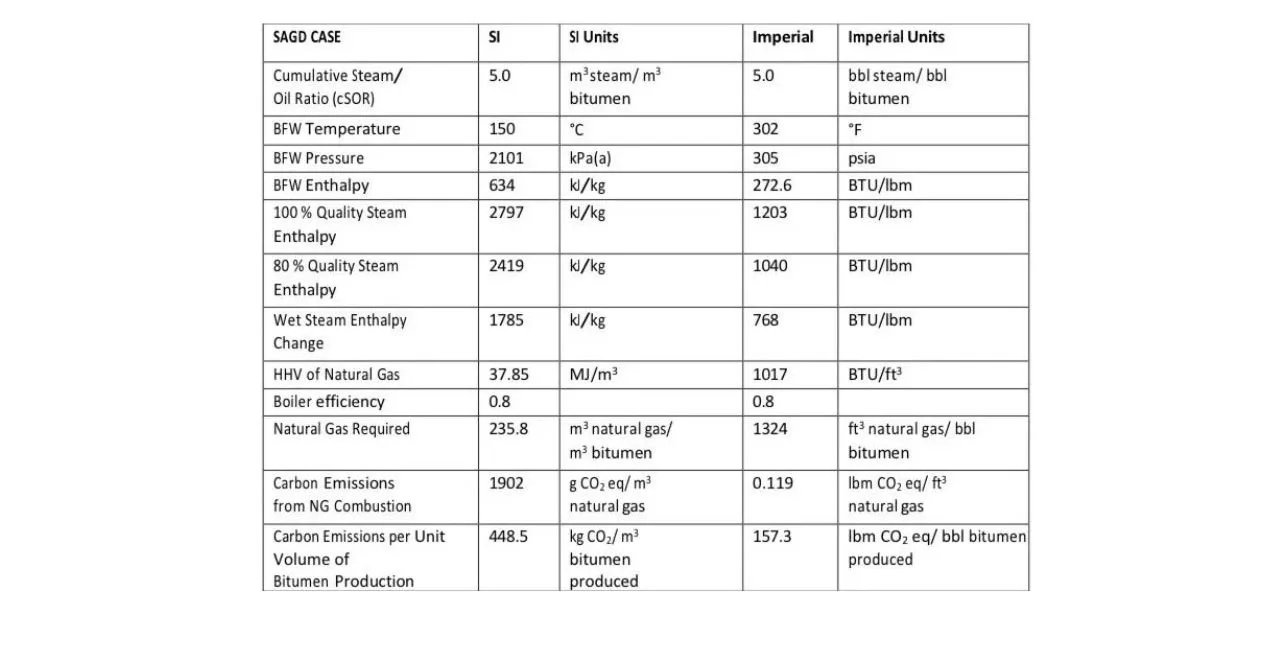
Table 2. SAREH Carbon Emissions per Unit Volume of Bitumen Production
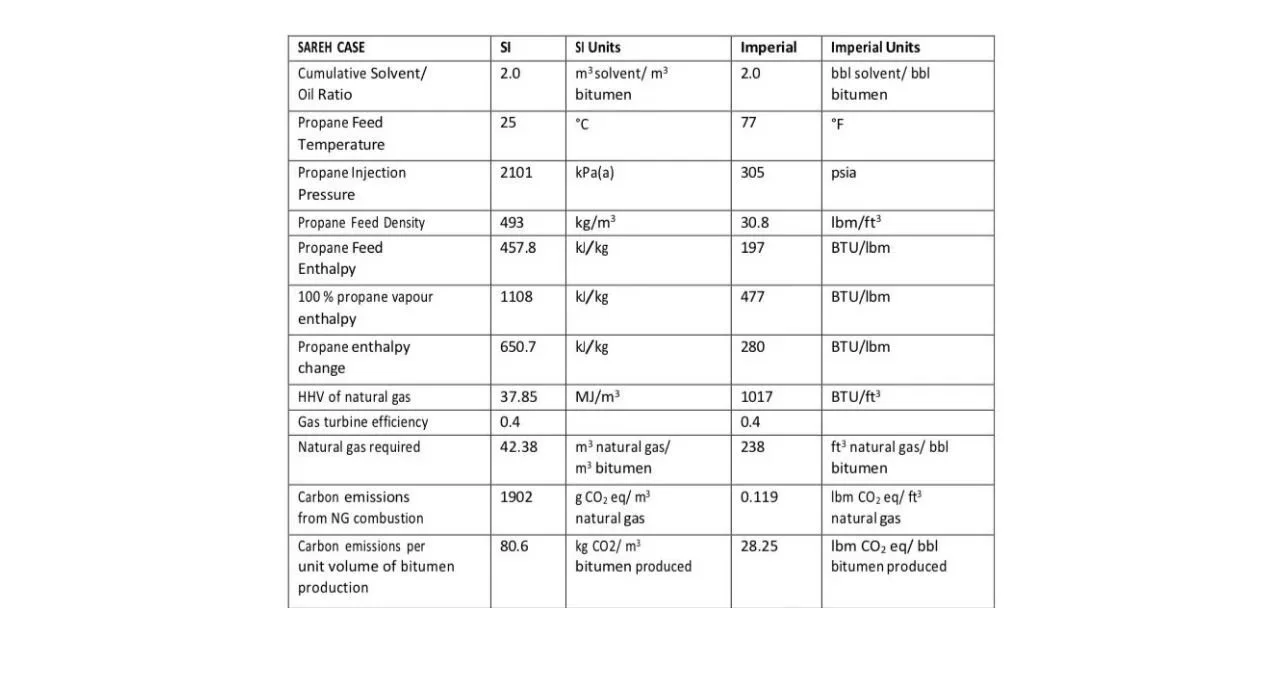
Comparing Tables 1 and 2 it is evident that the carbon emissions per unit volume of bitumen production are much lower in SAREH than SAGD, especially considering the poor efficiency of the gas turbines to generate electricity. But this may be explained by considering the lower volume of solvent employed, the lower enthalpy of propane, and the lower density of propane, all of which contribute to the lower energy per unit volume of production in SAREH compared to SAGD. Here, a cumulative solvent/oil ratio of 2.0 has been assumed that may be quite conservative compared to the value of 0.77 reported by Ivory et al (2010) and the figure of 0.77 excludes production from blowdown that would make the solvent/oil ratio even lower. This means that the carbon emission reductions possible with SAREH are potentially even lower than those calculated in Table 2.
It should be noted that this analysis excludes the power that may be required for a production well heater, but it is thought that a production well heater would only be needed during start-up and would not be needed for most of the production operation.
Thermal cracking and aquathermolysis have been investigated for the case where the heater temperatures exceed 250 °C and a reaction kinetics model has been developed for use in numerical simulation of the process (Hassanzadeh et al 2016, Hassanzadeh et al 2017). However, current thinking would have the temperatures set below this level so that aquathermolysis and thermal cracking would not be issues. Field-scale numerical simulation has also been done to prepare production forecasts for economic evaluation and to allow preparations for field testing of the technique (Rabiei Faradonbeh et al, 2016b).
Improving Vertical Communication in Reservoirs Undergoing Recovery by Gravity Drainage
A number of recent studies have evaluated the potential for improving vertical communication in reservoirs being exploited using gravity drainage processes.
Barriers to vertical flow of fluids have a severely detrimental effect on such processes. Reservoir shale layers with low permeability present barriers to flow that will substantially reduce the ability of fluids to rise in the formation creating a vapor chamber or for liquids to drain downward to allow production of oil. The use of heating and cooling to break shales has been investigated and some promising techniques identified (Settari et al 2018, Settari et al 2020).
DISCUSSION and CONCLUSIONS
Promising recovery processes that have potential to enhance or replace SAGD have been described. The motivation for undertaking research and development activities towards the goal of improving or replacing SAGD stems from the high costs and environmental impacts of SAGD.
The ultimate success of any potential new process to accomplish the stated objectives will rest on the economic comparison between SAGD and the new process and also on the ability of the new process to achieve the same or higher levels of resource recovery while reducing carbon emissions and water requirements. The steam additive processes are designed mainly to reduce SOR while maintaining oil production rates and increase ultimate recovery.
These processes are most applicable for enhancing existing SAGD operations. Their economics will depend on the trade-off between the cost of the additives and equipment for their injection and the benefit in terms of additional oil production obtained. In the case of reduced SOR, for a fixed steam plant size, steam is made is available for injection into additional wells and so for the capital invested in the steam generation and water treatment facilities, incremental oil production is obtained. Solvent addition to steam needs to be started early in the SAGD recovery process and best performance requires careful consideration of the best solvent to use and its concentration in steam. NCG addition to steam is best applied later in the SAGD process when there is considerable heat in the reservoir. The NCG can assist with draining warm oil from the upper part of the formation, reduce SOR and maintain reservoir pressure. But care must be taken not to inject too much NCG too early as this may cause a reduction in oil production rate because of suppression of the oil effective permeability. Direct- contact steam generators, while they have greater energy efficiency, may be problematic regarding reduction in oil production rate as a result of suppression of the relative permeability to oil by the NCG flowing in the reservoir.
The economic case for hybrid steam/in-situ combustion processes like SAGDOX is like steam additives such as solvents, NCGs, and surfactants and oxygen may in some sense be considered an additive to steam, given that the oxygen to steam ratios contemplated are low. The hybrid steam/combustion processes have the same basic goals as the more commonly considered steam additive processes. Use of oxygen as an additive to steam in mid to late SAGD process life creates not only heat in the reservoir allowing steam injection rate to decrease but also provides a source of NCG to maintain pressure and recover additional oil.
In the case of processes that could replace steam injection, for example SAREH, the trade-offs become the savings in cost through elimination of the large steam injection and water treatment facilities along with the cost of fuel for steam generation versus the costs for electricity and solvents. The oil production rates for such a process will be lower than in SAGD and closer well spacing may be required so these factors also enter into the economic comparison between the processes. Ultimately the future of the in-situ recovery industry for extraction of oil sands resources may depend on the development of lower cost, more energy efficient and lower environmental impact processes, especially if oil prices are low for an extended period. Higher taxes and penalties on carbon emissions will promote the use of lower emission recovery processes. In addition to improved economics under carbon levies, reduction in carbon emissions will improve the social license to produce the oil sand and heavy oil resources.
Both SAREH and SAGDOX are promising recovery methods that can achieve the stated goals for the recovery process. Both have been extensively tested in the laboratory and both have been simulated at the field scale revealing favorable economics compared with SAGD. Further experimental and numerical modeling work can be done but likely the next step is to field pilot these methods. The incremental cost and risks for field testing in an existing SAGD project are quite low, especially considering that the well pair(s) used for field testing can be converted to SAGD operation after pilot testing has been completed. For field testing to be successful, it is necessary to establish a good SAGD baseline with which to compare the new processes and to ensure that at the end of the tests it is clear how the new techniques performed. This requires careful monitoring of production with regular testing and fluid sampling to ensure that a definitive conclusion can be reached. Processes like SAREH are ideal for existing SAGD operations where there is co-generation of steam and electricity. Even in cases where electricity must be generated on site, it has been shown that carbon emissions are only 18 % of those from SAGD on a per unit of production basis.
Comprehensive References for this article are available on pages 103-110 or online at: REFERENCES/ https://choa.ab.ca/uploads/2024/03/References-Harding-Reduce-Environmental-Impact.pdf
NOMENCLATURE
BFW - boiler feed water
cSOR - cumulative steam-oil ratio
DCSG - direct-contact steam generator
GOR - gas-oil ratio
HHV - high heating value
HTO - high temperature oxidation
ISC - in-situ combustion LTO - low temperature oxidation
NCG - non-condensable gas
OTSG - once-through steam generator
RTO - ramped temperature oxidation SAGD steam-assisted gravity drainage
SAGDOX - steam-oxygen gravity drainage process SAGP steam and gas push recovery method
SAREH - solvent-assisted resistive electric heating SMR small modular reactor
SOR - steam-oil ratio

Dr. Thomas G. Harding
Tom Harding holds BSc and MSc degrees in Chemical Engineering from the University of Calgary and a PhD in Petroleum Engineering from the University of Alberta. He has over 30 years of industry experience in a variety of oil and gas project evaluations, development and production operations. He is a former head of the Chemical & Petroleum Engineering Department at the University of Calgary where he conducted research into improved recovery methods for heavy oil and oil sands, produced water treatment and production of biofuel from waste biomass. Dr. Harding has taught courses in petroleum production engineering and non-renewable resource development. He has been retired since 2018.
METHODS TO REDUCE ENVIRONMENTAL IMPACT OF IN-SITU RECOVERY OF HEAVY OIL AND BITUMEN
Dr. Thomas G. Harding
REFERENCES
Abbasi, Y. and Chalaturnyk, R. (2016): “Effect of Shear Failure Around Steam Chamber edge on Optimization of Solvent Assisted SAGD (SA-SAGD) in Oil Sands Reservoirs”, SPE 180722, presented at the SPE Canada Heavy Oil Technical Conference, Calgary, Alberta, 7-9 June.
Aherne, A., and Maini, B. (2008): “Fluid Movement in the SAGD Process: A Review of the Dover SAGD Project”, J. Can. Pet. Tech. 47(1): 31-37. Al-Murayri, M., Harding, T.G., and Maini, B. (2011), Impact of Noncondensable Gas on Performance of Steam-assisted Gravity Drainage, J. Can. Pet. Tech. 50(7): 46-54.
Al-Murayri, M.T., Maini, B.B., Harding, T.G., and Oskouei, J. (2016a): “Multicomponent Solvent Co-injection with Steam in Heavy and Extra-heavy Oil Reservoirs”, Energy & Fuels, 30 (4), pp. 2604-2616, DOI:10.1021/acs.energyfuels.5b02774
Al-Murayri, M.T., Maini, B.B., Harding, T.G., and Oskouei, J. (2016b): “Cracked Naphtha Co- injection in Steam-Assisted Gravity Drainage”, Energy & Fuels, 30 (7), pp. 5330-5340, DOI:10.1021/acs.energyfuels.5b02773
Ashoori, S., and Gates, I.D. (2022), “Carbon Intensity of In-situ Oil Sands Operations with Direct Contact Steam Generation Lower than that of Once-Through Steam Generation”, Journal of Cleaner Production, 367, 11 pp., https://doi.org/10.1016/j.clepro.2022.133046 available online 14 July 2022.
Bogdanov, I, Torres, J. A., Kamp, A. and Corre, B. (2011): “Comparative Analysis of Electromagnetic Methods for Heavy Oil Recovery”, SPE 150550 presented at the SPE Heavy Oil Conference and Exhibition, Kuwait City, Kuwait, 12-14 December, 15 pp. Butler, R.M. (1999): “The Steam and Gas Push (SAGP)”, J. Can. Pet Tech., 38(3): 54-61.
Butler, R.M. and Yee, C.-T. (1986): “A Theoretical Study of Steam Condensation in the Presence of Non-condensable Gases in Porous Solids”, AOSTRA J. of Research, 3(1).
Butler, R.M., Jiang, Q., and Yee, C-T. (2000): “Steam and Gas Push (SAGP) – 3: Recent Theoretical Developments and Laboratory Results”, J. Can. Pet. Tech. 39(8): 51-60.
Butler, R.M. (2004): The Behaviour of Non-Condensible Gas in SAGD – A Rationalization, J. Can. Pet. Tech. 43(1): 28-34.
Charpentier, A.D., Bergerson, J. A., and MacLean, H.L. (2009): “Understanding the Canadian Oil Sand’s Industry’s Greenhouse Gas Emissions”, Environmental Research Letters, https://doi:10.1088/1748-9326/4/1/014005 , 11 pp.
Chen, J., and Ito, Y. (2012), Effect of Oil-Viscosity-Gradient Presence on SAGD, J. Can. Pet. Tech., March 2012, 95-105. Colins, P.M. (2007): “Geomechanical Effects on the SAGD Process”, SPE Reservoir Evaluation and Engineering, Vol.10, No. 4, pp. 367-375.
Esmaeili, S., Sarma, H., Harding, T.G. and Maini, B.B. (2019a): “Review of Effect of Temperature on Oil-Water Relative Permeability in Porous Rocks of Oil Reservoirs”, Fuel, V. 237, February 2019, pp. 91-116, https://doi.org/10.1016/j.fuel.2018.09.100 .
Esmaeili, S., Modaresghazani, J., Sarma, H., Harding, T.G. and Maini, B.B. (2019b): “Effect of Temperature on Relative Permeability – Role of Viscosity Ratio”, Fuel, V. 278, 15 October 2020, https://doi.org/10.1016/j.fuel.2020.118318
Esmaeili, S., Sarma, H., Harding, T.G. and Maini, B.B. (2019c) “The Effect of Temperature on Two-Phase Oil/Water Relative Permeability in Different Rock/Fluid Systems”, paper number SPE-195859-MS presented at the SPE Annual Technical Conference and Exhibition, Calgary, Alberta, Canada, September 2019, https://doi.org/10.2118/195859-MS, Published: 23 September 2019
Esmaeili, S., Sarma, H., Harding, T. and Maini, B. (2020a): “Effect of Temperature on Bitumen- Water Relative Permeability in Oil Sands”, Energy & Fuels, V.34, N.10, pp. 12314-12329, https://doi.org/10.1021/acs.energyfuels.0c02180 , 14 September 2020.
Esmaeili, S., Sarma, H., Harding, T.G. and Maini, B.B. (2020b): “Two-Phase Bitumen/Water Relative Permeability at Different Temperatures and SAGD pressure: Experimental Study”, Fuel, V. 276, 15 September 2020, https://doi.org/10.1016/j.fuel.2020.118014
Esmaeili, S., Sarma, H., Harding, T., and Maini, B. (2020c): “Experimental Study of the Effect of Solvent Addition and Temperature on Two-Phase Bitumen/Water Relative Permeability, SPE Res. Eval. & Eng. V. 23 (04): pp. 1381–1402, 12 November 2020, Paper Number: SPE-199939- PA https://doi.org/10.2118/199939-PA
Goodwin, R.D., and Haynes, W. D. (1982), “Thermophysical Properties of Propane from 85 to 700 K at Pressure to 7 Mpa”, National Bureau of Standards Monograph 170, U.S. Department of Commerce, National Engineering Laboratory, Thermophysical Properties Division, Boulder, Colorado, 249 pp.
Greaves, M., Saghr, A.M., Xia, T.X., Turta, A.T., and Ayasse, C. (2001): “THAI – New Air Injection technology for Heavy Oil Recovery and In Situ Upgrading”, J. Can. Pet. Tech., 40(3): 38-47.
Greaves, M., Dong, L.L. and Rigby, S.P. (2012): “Validation of Toe-to-Heel Air-Injection Bitumen Recovery Using 3D Combustion-Cell Results”, SPE Reservoir Evaluation & Engineering, February 2012, 72-85. doi:10.2118/143035-PA
Harding, T.G., Farouq Ali, S.M. and Flock. D.L. (1983): “Steamflood Performance in the Presence of Carbon Dioxide and Nitrogen”, J. Can. Pet. Tech., 22(5): 30-37.
Harding, T.G. (2014a): “Non-Condensable Gas Additives to Steam for SAGD Process Enhancement”, presentation made at the SPE/CHOA Slugging-It-Out XII Meeting, Calgary, Alberta, 1 April 2014.
Harding, T.G. (2014b): “Considerations for the Addition of Non-condensable Gases to Steam in the SAGD Process”, presentation to the Heavy Oil and Horizontal Wells Special Interest Group, SPE Calgary Section, Calgary Petroleum Club, 30 October.
Harding, T.G. (2015): “Is This the End of the Steam Age? The Promise of Novel In-situ Recovery Methods for Oil Sands and Heavy Oil”, presentation made at the 3rd Annual Sino- Canadian Oil and Gas Symposium, Calgary, Alberta, 10 June 2015.
Harding, T.G., Zanon, S.D., Imran, M, and Kerr, R.K (2015): “In-situ Reflux: A Low Cost In- situ Recovery method for Oil Sands”, 65th Annual Canadian Chemical Engineering Conference, Calgary, Alberta, 4-7 October 2015.
Harding, T.G., Zanon, S., Imran, M., and Kerr, R.K. (2016): In-situ Reflux: An Improved In- situ Recovery Process for Oil Sands”, SPE-180752-MS presented at the SPE Canada Heavy Oil Technical Conference, Calgary, June 7-9.
Harding, T.G. and MacFarlane, W.D. (2016): “A Review of Promising Enhanced In-situ Recovery Methods for Oil Sands” Paper WHOC-242, presented at the World heavy Oil Congress 2016, Calgary, Alberta.
Harding, Thomas Grant (2023): “Method and System for Oil recovery using Solvent-Assisted Electric Heating”, U.S. patent provisional filing 63/504,463, 26 May 2023.
Hassanzadeh, H. and Harding, Thomas (2016): “Analysis of Conductive Heat Transfer during In-situ Resistive Electrical Heating of Oil Sands”, Fuel, V. 178, pp. 290-299 http://dx.doi.org/10.1016/j.fuel.2016.03.070.
Hassanzadeh, H., Harding, Thomas G., Moore, R. Gordon., Mehta, Sudarshan A., and Ursenbach, Matthew, G. (2016): “Gas Generation during Electrical Heating of Oil Sands”, Energy & Fuels, 18 August 2016, http://dx.doi.org/10.1021/acs.energyfuels.6b01227
Hassanzadeh, H., Rabiei Faradonbeh, M., and Harding, T. (2017): “Simulation of Solvent and Water Assisted Electrical Heating Including Aquathermolysis and Thermal Cracking Reactions”, AIChEJ, published online by Wiley Online Library, 24 April 2017, 10.1002/aic.15774.
Hosseininenjad Mohebati, M., Maini, B.B., and Harding, T.G. (2012a): “Numerical Simulation Investigation of the Effect of Heavy-oil Viscosity on the Performance of Hydrocarbon Additives in SAGD”, SPE Reservoir Evaluation & Engineering, April, pp. 165-181.
Hosseininejad Mohebati, M., Maini, B.B., and Harding, T.G. (2012b): "Experimental Evaluation of Hexane Addition to Steam in SAGD", WHOC12-315, presented at the World Heavy Oil Congress, Aberdeen, 10-13 Sept.
Ito, Y, and Chen, J. (2010), Numerical History Match of the Burnt Lake SAGD Process, J. Can. Pet. Tech., 49(5):40-49. Ivory, J., Frauenfeld, T., and Jossy, C. (2010): “Thermal Solvent Reflux and Thermal Solvent Hybrid Experiments”, J. Can. Pet. Tech., 49(2):23-31.
Japan Canada Oil Sands Limited (JACOS) (2009), Hangingstone SAGD Demonstration Project, Application for Amendment of Approval 8788G for Non-condensable Gas Injection, submitted to the Alberta Energy Resources Conservation board, Calgary, December 2009.
Ji, D., Harding, T., Chen, Z., Dong, M., & Liu, H. (2019): “Modelling of Electromagnetic Heating Process and its Applications in Oil Sands Reservoirs”, paper presented at the SPE Reservoir Simulation Symposium, Galveston, Texas, 10-11 April 2019, doi :10.2118/193905- MS.
Ji, D., Harding, T.G., Chen, Z., Dong, M., and Hui, Liu. (2020): “Feasibility of Electromagnetic Heating for Oil Sands Reservoirs”, SPE 199910-MS, presented at the SPE Canada Heavy Oil Conference, Calgary, 18-19 March.
Kerr, R.K. (2012): “Steam Assisted Gravity Drainage Processes with the Addition of Oxygen”, U.S Patent 9,163,491, Issued 27 September 2012.
Kerr, R. K., & Jonasson, H. P. (2013). SAGDOX - Steam Assisted Gravity Drainage with the Addition of Oxygen Injection. SPE 165509, presented at the SPE Heavy Oil Conference Canada, 11-13 June. doi:10.2118/165509-MS.
Keshavarz, M., Harding, T.G., and Chen, Z. (2016): “Modification of Butler’s Unsteady-State SAGD Theory to Include the Vertical Growth of Steam Chamber”, SPE-180733-MS presented at the SPE Canada Heavy Oil Technical Conference, Calgary, 7-9 June.
Keshavarz, M., Harding, T.G., and Chen, Z (2019): “A New Approach to Analytical Treatment of Steam-Assisted Gravity Drainage: A Prescribed Interface Model”, SPE Journal, V.24, N. Ppp. 492-510, paper SPE-194203-PA (posted 28 January 2019), https://doi.org/10.2118/194203- PA.
Khaledi, R., Boone, T.J., Motahhari, H.R., and Subramanian, G. (2015): “Optimized Solvent for Solvent Assisted-Steam Assisted Gravity Drainage (SA-SAGD) Recovery Process”, SPE- 174429, presented at the SPE Canada Heavy Oil Technical Conference, Calgary, Alberta, 9- 11 June.
Koolman, M., Huber, N., Diehl, D. and Wacker, B. (2008), “Electromagnetic Heating Method to Improve Steam Assisted Gravity Drainage”, SPE/PS/CHOA, 117481, presented at the SPE International Thermal Operations and Heavy Oil Symposium, Calgary, Alberta, 20-23 Oct. 2008, 12 pp.
Kovaleva, L. and Davletbaev, A. (2010): “Recoveries of Heavy Oil and Bitumen techniques with radio frequency Electromagnetic Irradiation”, SPE 138086 presented at the SPE Russian Oil & Gas Conference, Moscow, 26-28 October 2010, 11 pp.
McGee, B.C.W. and Vermeulen, F.E. (2000): “In Situ Electromagnetic heating for Hydrocarbon Recovery and Environmental Remediation”, J. Can. Pet. Tech . Distinguished Author Series 39(8): 24-28.
McGee, B.C.W. and Vermeulen, F.E. (2007): “The Mechanisms of Electrical Heating for the Recovery of Bitumen from Oil Sands”, J. Can. Pet. Tech. 46(1): 28-34.
McGee, B.C.W. (2008): “Electro-Thermal Pilot in the Athabasca Oil Sands: Theory Versus Performance”, paper 2008-209 presented at the Canadian International Petroleum Conference/SPE Gas Technology Symposium 2008 Joint Conference, Calgary, Alberta, 17-19 June 2008, 14 pp.
PetroCanada (2005), MacKay River Project, Application for Non-condensable Gas Injection, submitted to the Alberta Energy and Utilities Board, Edmonton, Alberta, 31 March 2005.
Rabiei Faradonbeh, M., Harding, T.G., Abedi, J, and Hassanzadeh, H. (2015): "Stability Analysis of Coupled Heat and Mass Transfer Boundary Layers during Steam-Solvent Recovery Process", Transport in Porous Media, 108(3), 595-615.
Rabiei Faradonbeh, M., Harding, T. G., & Abedi, J. (2016a). Semi-Analytical Modeling of Steam- Solvent Gravity Drainage of Heavy Oil and Bitumen, Part 2: Unsteady-State Model with Curved Interface. SPE Reservoir Evaluation & Engineering – Reservoir Engineering. SPE 170123-PA. http://dx.doi.org/10.2118/170123-PA. (in press 24 June 2016).
Rabiei Faradonbeh, M., Hassanzadeh, H. and Harding, T.G. (2016b): “Numerical Simulations of Bitumen Recovery using Solvent and Water Assisted Electrical Heating”, Fuel, JFUE-D-16- 02085, In Press.
Redford, D.A. (1982): “The Use of Solvents and Gases with Steam in the Recovery of Bitumen from Oil Sands”, J. Can. Pet. Tech. 21(1): 45-53.
Rios, E., Harding, T.G., Moore, R.G., Mehta, and S.A. (2018): “3-D Physical Modeling of Hybrid Steam and Oxygen for In-situ Recovery of Oil Sands”, SPE 189757-MS presented at the SPE Heavy Oil Conference, Calgary, Alberta, 13-14 March.
Sadeghi, A., Hassanzadeh, H., and Harding, T.G. (2017a): “Modeling of Desiccated Zone Development Using Electromagnetic Heating of Oil Sands”, Journal of Petroleum Science and Engineering, 26 April 2017, 154 163-171, http://dx.doi.org/10.1016/j.petrol.2017.04.0633
Sadeghi, A., Hassanzadeh, H., and Harding, T.G. (2017b): “A Comparative Study of Oil Sands Preheating using Electromagnetic Waves, Electrical Heaters and Steam Circulation”, International Journal of Heat and Mass Transfer, 6 April 2017, 111 908–916, http://dx.doi.org/10.1016/j.ijheatmasstransfer.2017.04.060
Sadeghi, A., Hassanzadeh, H., and Harding, T.G. (2017c): “Thermal Analysis of High Frequency Electromagnetic Heating of Lossy Porous Media”, Chemical Engineering Science, 9 June 2017, 172 13-22, http://dx.doi.org/10.1016/j.ces.2017.06.0613
Sadeghi, A., Hassanzadeh, H., and Harding. T. (2018): “Numerical Modeling of Electromagnetic-based Hybrid EOR Techniques for Bitumen Recovery”, Paper Mo A2 11 presented at European Association of Geoscientists and Engineers 16th European Conference on the Mathematics of Oil Recovery (ECMOR XVI), Barcelona, Spain, 3-6 September 2018.
Sadeghi, A., Hassanzadeh, H., Harding. T.G., MacFarlane, B., Bashti, S., and Haghighat, P. (2020): “Numerical Modeling of Electromagnetic-based Thermal Recovery Techniques Combined with Solvent Injection”, International Journal of Heat and Mass Transfer, V. 151, 2020, https://doi.org/10.1016/j.ijheatmasstransfer.2020.119393 .
Saeedi, M., Settari, A., Harding, T. G., & Rios, E. (2018): “Modeling of Thermal Geomechanical Effects in the SAGDOX Recovery Process in Oil Sands”, American Rock Mechanics Association, 52nd US Rock Mechanics/Geomechanics Symposium, Seattle, 17-20 June 2018.
Settari, A., Harding, T. G., Saeedi, M., Walters, D. A., & Nassir, M. (2018): “Use of Thermal Geomechanics for Improving Vertical Communication in Oil Sands Reservoirs with Interbedded Shales”, American Rock Mechanics Association, 52nd US Rock Mechanics/Geomechanics Symposium, Seattle, 17-20 June 2018.
Settari, T, Saeedi, M, and Harding, T. (2020): “Integrated Subsurface Studies – Geomechanics and Pore Pressure”, paper no. 1252 presented at the 82nd Annual EAGE Conference and Exhibition, Amsterdam, 8 – 11 June.
Suncor Energy Inc. (2010), Application for Non-condensable Gas Injection, Section 26 Test Project, MacKay River Project, submitted to the Alberta Energy Resources Conservation Board, Calgary, Alberta, 19 July 2010.
Wacker, B., Karmeileopardus, D., Trautmann, B., Helget, A., and Tolak, M. (2011): “Electromagnetic Heating for In-Situ Production of Heavy Oil and Bitumen Reservoirs”, CSUG/SPE 148932 presented at the Canadian Unconventional Resources Conference, Calgary, Alberta, 15-17 November 2011, 14 pp.
Wise, S. and Patterson, C. (2016), Reducing supply cost with Eseieh pronounced easy, SPE- 180729-MS presented at the SPE Canada Heavy Oil Technical Conference, Calgary, Alberta, 7-9 June 2016.
Yang, M., Chen, Z, and Harding, T.G. (2016): “An Improved Kinetic Reaction Model of In-situ Combustion for Pre-Steamed Oil sands”, SPE-180728-MS presented at the SPE Canada Heavy Oil Conference, Calgary, Alberta, 7-9 June.
Yang, M., Chen, Z, and Harding, T.G (2017a): “An Improved Kinetics Model for In-situ Combustion of Pre-Steamed Oil Sands”, Energy & Fuels, 10 February 2017, http://dx.doi.org/10.1021/acs.energyfuels.6b02582
Yang, M., Harding, T. G., Chen, Z., Yu, K., Liu, H., Yang, B. and Ruijian, H. (2017b): “Numerical Modelling of Hybrid Steam and In-Situ Combustion Performance for Oil Sands”, MS-182708- MS, presented at the SPE Reservoir Simulation Conference, Montgomery, Texas, 20-22 February, 16 pp.
Yang, M., Harding, Thomas G., and Chen, Zhangxin (2019a): “Numerical Investigation of the Mechanisms in Co-injection of Steam and Enriched Air Process using Combustion Tube Tests”, Fuel, V. 242, pp. 638-648, ISSN 0016-2361, https://doi.org/10.1016/j.fuel.2019.01.041.
Yang, M., Harding, T.G., and Chen, Z. (2020): “Field-Scale Modelling of Hybrid Steam and Combustion In-situ Recovery Process for Oil Sands using Dynamic Gridding”, SPE Reservoir Engineering, v. 23, pp. 311-325, https://doi.org/10-189726-PA .